

Contractors’ Guide to TG20 Rules and Bespoke Scaffold Design
Construction sites rarely operate in perfect conditions. Projects move quickly. Trades overlap. Deadlines tighten. When work at height enters the picture, the risks increase immediately.
Scaffolding often sits at the centre of that risk.
If scaffold structures are poorly designed or incorrectly erected, the consequences can escalate quickly. Access becomes unstable. Loading assumptions fail. Edge protection is compromised. Suddenly, what should be a controlled work platform becomes a serious safety hazard.
And when something goes wrong, responsibility rarely sits with the scaffolder alone.
Under the Work at Height Regulations 2005, contractors and site managers must ensure work equipment used at height is safe, suitable and properly planned. That includes the scaffolding supporting the workforce.
Yet many contractors still assume scaffolding design is straightforward. A scaffold goes up, access is provided and work continues.
In reality, modern scaffold structures are engineered systems. Load classes must be understood. Tie spacing must be calculated. Bracing patterns must be correct. If these elements are wrong, the scaffold may not meet recognised safety standards.
This is exactly why TG20 guidance exists.
Produced by the National Access and Scaffolding Confederation (NASC), TG20 provides the industry framework for designing and erecting tube and fitting scaffolding safely and consistently.
Understanding how TG20 works — and when projects require bespoke scaffold design — helps contractors protect their sites, manage risk, and choose a compliance-first scaffolder like PJ Slater.
Why TG20 Matters to Contractors and Site Managers
Scaffolding is a temporary structure, but the risks associated with it are very real.
When scaffolds fail, the consequences are immediate. Workers can fall. Materials can collapse. Projects can stop overnight while investigations take place.
This is why scaffold design is governed by strict health and safety guidance.
In the UK, scaffolding must comply with the Work at Height Regulations 2005, which require all work at height to be properly planned and carried out safely.
Contractors are legally responsible for ensuring the access equipment used on their sites meets these requirements.
That includes ensuring scaffold structures follow recognised safety standards.
Across Britain, falls from height remain the largest cause of fatal workplace injuries, according to the Health and Safety Executive.
Many of these incidents occur on construction sites where workers rely on scaffolding, temporary access structures and elevated work platforms.
TG20 guidance exists to prevent those failures.
By defining safe configurations for tube-and-fitting scaffolding, TG20 helps ensure scaffold structures are erected safely, consistently and within recognised engineering limits.
What TG20 Actually Is (and Why It Exists)
TG20 is the UK scaffolding industry’s main technical guidance for tube-and-fitting scaffolding design.
The guidance is produced by the National Access and Scaffolding Confederation (NASC), the UK’s leading trade body for scaffolding safety and technical standards.
TG20 is built around two core resources:
- TG20 Operational Guide
- TG20 eGuide
- TG20 Compliance Sheets
Together, these tools allow scaffolders and contractors to confirm whether a scaffold configuration falls within recognised safety limits.
The guidance focuses primarily on common scaffold structures such as:
- Independent scaffolds
- Façade access scaffolds
- Loading bays
- Temporary access structures
TG20 also aligns scaffold design with recognised engineering standards such as BS EN 12811, the European standard governing scaffold performance and loading requirements.
BS EN 12811 sets structural requirements for scaffold platforms, including stability, load capacity and safety factors.
TG20 translates these structural principles into practical guidance for real construction sites.
In simple terms, it provides a framework that makes sure scaffolding is built safely without requiring full engineering design for every structure.
Looking for a compliance-first scaffolder who adheres to all TG20 rules? Fill in the form below to speak to our specialist team.
How TG20 Works in Practice on Construction Sites
On real projects, contractors rarely interact directly with the TG20 design guide itself.
Instead, they encounter TG20 through the documentation provided by scaffolding companies.
The most common example of this is TG20 compliance sheets.
TG20 Compliance Sheets
Compliance sheets confirm that a scaffold configuration meets TG20 requirements.
They act as a form of pre-engineered scaffold design, demonstrating that the structure falls within standard limits.
A compliance sheet typically confirms:
- Scaffold configuration
- Platform load classes
- Tie spacing
- Bay sizes
- Bracing patterns
These factors determine whether the scaffold can safely support workers, materials and equipment.
For contractors, compliance sheets provide a clear indication that the scaffold design follows recognised industry guidance.
They also form part of the documentation that supports health and safety compliance on site.
TG20 Operational Guide
TG20 also includes a tool known as the TG20 eGuide.
This software allows scaffolders to check scaffold configurations and generate compliance sheets quickly.
The eGuide evaluates factors such as:
- Scaffold height
- Load capacity
- Structural transoms
- Tie requirements
It helps confirm whether a scaffold falls within TG20 limits or requires a bespoke design.
Alongside the eGuide, the TG20 Operational Guide provides practical guidance for scaffolding operations, including erection procedures and safety checks.
Together, these tools allow scaffolding companies to confirm scaffold safety before work begins.
Types of Scaffold Covered by TG20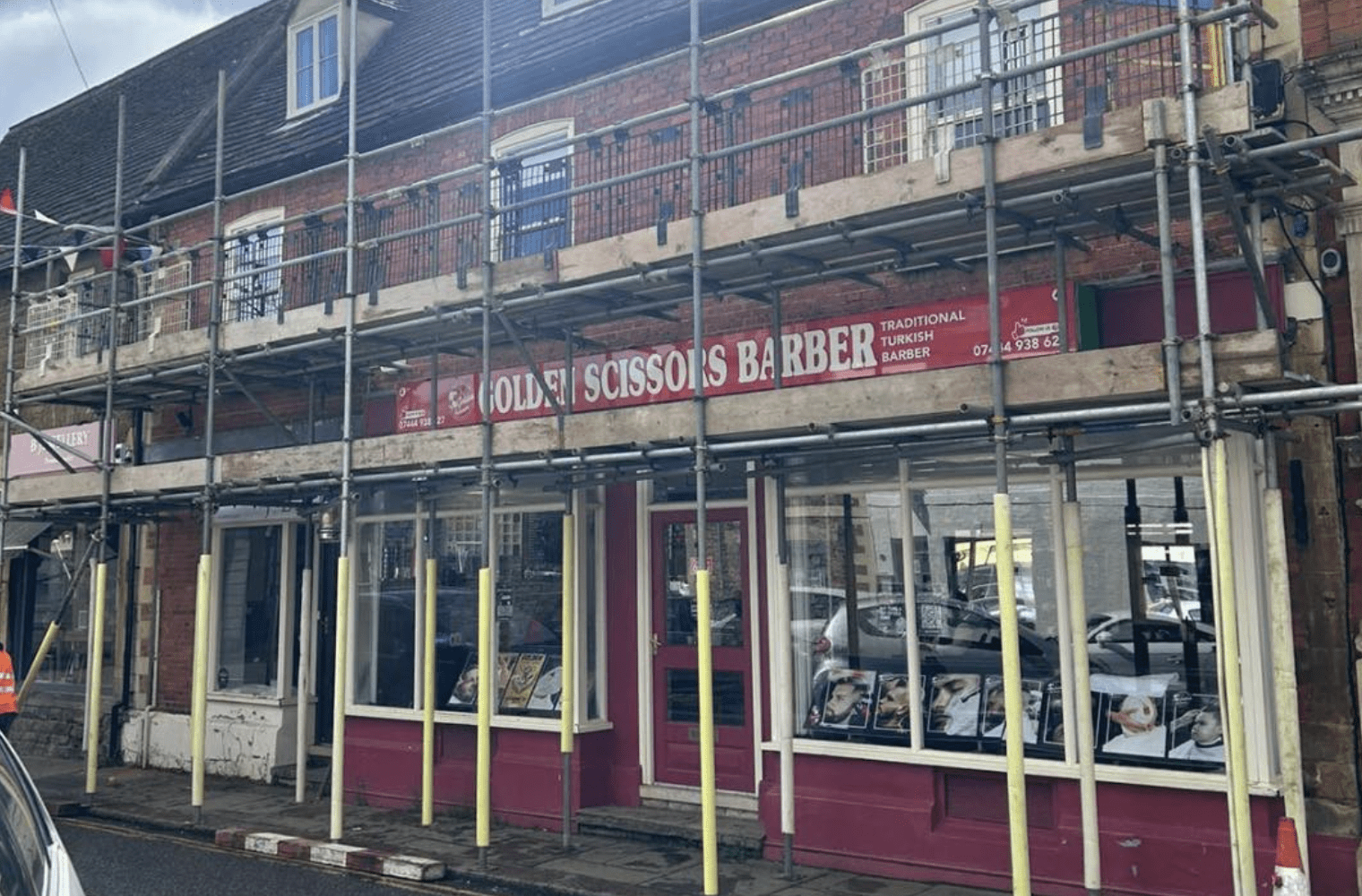
TG20 focuses primarily on tube and fitting scaffolding, which remains one of the most widely used scaffold systems in the UK construction industry.
These scaffolds are built from individual steel tubes connected with couplers, allowing flexible configurations for different building shapes.
Several common scaffold structures fall within TG20 guidance.
Independent scaffolding
Independent scaffolding is the most common scaffold type used for façade access.
It consists of vertical standards connected by horizontal ledgers and supported by structural transoms that hold scaffold boards.
Typical components include:
- Standards
- Ledgers
- Transoms
- Scaffold boards
- Toe boards
Independent scaffolds are commonly used for:
- Brickwork
- Cladding installation
- Roofing projects
- Window installation
- Building and shopfront repair and maintenance
Because they stand independently from the building structure, they provide a stable working platform along the building façade.
Putlog scaffolding
Putlog scaffolding is a variation where one end of the scaffold platform is supported by the building itself.
This system is commonly used during bricklaying operations where putlog holes are built into the wall.
While less common on modern projects, putlog scaffolds still appear on certain masonry works.
Loading bays and ladder access towers
TG20 also includes guidance for access structures such as:
- Loading bays
- Ladder access towers
- Stair towers
These structures provide safe temporary access between scaffold levels and allow materials to be delivered safely to elevated work areas.
Correct loading bay design is particularly important, as these platforms often carry heavier loads of materials and equipment.
When TG20 Is Not Enough
While TG20 covers many standard scaffold configurations, it does not cover every structure used on construction sites.
Certain scaffolds fall outside standard guidance.
Examples include:
- Cantilevered scaffold structures
- Chimney stack scaffolding
- Lift shaft towers
- Suspended scaffolds
- Complex loading platforms
These scaffolds involve unusual loading conditions, irregular structures, or structural constraints.
When this happens, a bespoke scaffold design must be created.
This ensures the scaffold structure can safely support the loads and conditions present on the project.
What Bespoke Scaffold Design Means
A bespoke scaffold design is an engineered scaffold design created specifically for a project.
These designs are typically produced by temporary works engineers or specialist scaffold designers.
Unlike TG20 compliance sheets, bespoke designs include full structural calculations.
They define:
- Structural loading
- Tie patterns
- Bracing layouts
- Load management
- Access design

Bespoke scaffold designs ensure the structure meets recognised engineering standards such as BS EN 12811 while also complying with the Work at Height Regulations 2005.
Because every project is different, bespoke designs allow scaffold structures to adapt to complex buildings and unusual site conditions.
Unfortunately, not all scaffolding companies have the capacity, skill, or technology to create safe bespoke designs.
Luckily, with 40+ years of experience and a dedicated in-house scaffolding design team, PJ Slater offers this service and is renowned for creating highly compliant scaffolding structures for all kinds of bespoke setups.
Why Contractors Should Care About Scaffold Design
Under the Work at Height Regulations 2005, contractors must ensure scaffolds used on site are safe, suitable for the task, and properly designed.
In other words, scaffold safety is not something you can simply outsource.
If a scaffold structure fails because the design was incorrect, incomplete or never properly checked, responsibility does not sit neatly with the scaffolding company alone. It can move up the chain to the contractor managing the work. It becomes your problem.
And when something goes wrong, the consequences escalate quickly.
A poorly designed scaffold can lead to:
- Structural collapse of the scaffold platform
- Workers falling from height due to unstable structures
- Materials dropping from poorly designed loading bays
- Major site shutdowns while investigations take place
At that point, the Health and Safety Executive (HSE) becomes involved.
Investigations can result in:
- Enforcement notices
- Prosecution under health and safety law
- Substantial fines
- Project delays while evidence is reviewed
In serious cases involving injury or structural failure, directors or senior managers may also face personal liability if it is shown that proper planning and design checks were not carried out.
This is why scaffold design is treated as part of temporary works engineering on modern construction sites.
Contractors cannot assume a scaffold is safe simply because it has been installed. They must ensure the structure follows recognised guidance such as TG20 or is supported by a bespoke scaffold design prepared by a competent designer.
In practice, most contractors rely on experienced scaffolding providers to manage these technical requirements. A knowledgeable scaffolder can confirm when a structure falls within TG20 limits and when an engineered design is required.
That clarity protects the site, the workforce and the contractor responsible for the project.
How TG20 and SG4 Work Together for Scaffold Safety
TG20 focuses on scaffold structure design, but it is not the only safety guidance used in the scaffolding industry.
Another key NASC document is SG4 – Preventing Falls in Scaffolding Operations.
SG4 focuses on how scaffolds are erected safely, including fall prevention during installation and dismantling.
The guidance emphasises safe methods of work that reduce exposure to fall risks while scaffolders assemble the structure.
While TG20 addresses structural safety, SG4 addresses operational safety.
Together, the two guidance documents form the foundation of modern scaffold safety practice.
The Role of Scaffolding Companies in TG20 Compliance

Most contractors don’t design scaffolds themselves.
Instead, they rely on professional scaffolding companies to manage:
- Scaffold design
- Installation
- Scaffolding inspections
- Safety documentation
A professional scaffolding company is responsible for ensuring structures are erected safely and comply with TG20 guidance where applicable.
Their responsibilities often include:
- Safe erection of scaffold structures
- Inspection procedures
- Reports and record-keeping
- Emergency and rescue requirements
This is why choosing an experienced scaffolding provider matters. A knowledgeable scaffolder like PJ Slater understands both the technical requirements of scaffold design and the operational realities of construction sites.
 How PJ Slater Delivers TG20-Compliant Scaffolding
At PJ Slater, scaffolding is treated as a structured engineering system rather than a temporary installation.
Our experienced teams specialise in tube and fitting scaffolding, allowing flexible scaffold structures to be erected safely across a wide range of projects.
Where scaffold configurations fall within TG20 limits, compliance sheets confirm the design meets recognised standards.
When projects require something more complex, our team provides bespoke scaffold design, ensuring scaffold structures remain safe and compliant.
Inspection regimes, documentation and communication with site managers ensure scaffold structures remain safe throughout the project.This structured approach helps contractors maintain compliance with the Work at Height Regulations while keeping projects moving efficiently.
Looking for bespoke scaffolders who know TG20 inside out? Pick PJ Slater.
TG20 provides the framework for safe scaffold design across the UK construction industry. It allows standard scaffold configurations to be erected safely without requiring full engineering design every time.
But real construction projects are rarely simple.
Complex buildings, unusual loads and difficult access conditions often require bespoke engineering solutions.
Contractors who work with experienced scaffolding teams gain access to both — standard TG20 scaffolds and engineered bespoke designs when required.
And in an industry where health and safety compliance is critical, that expertise helps reduce risk and keep projects moving safely.
This is why smart contractors choose PJ Slater. Get in contact today.
📞 Call 01733 234 831
📧 Email info@pjsscaffold.co.uk
📝 Fill out our enquiry form for a free, no-obligation quote
We proudly serve Peterborough, Cambridgeshire, Stamford, Rutland, Leicestershire, Lincolnshire, Bedfordshire, and Northamptonshire
Let’s take the stress out of your future scaffolding jobs. We’ll keep it safe, simple, and within budget.
Got questions? Contact us or check out our scaffolding FAQs.


