
When you choose a scaffolder, you expect that they follow high safety standards. Reliable scaffolding solutions should be a bespoke response to your needs. But they don’t always.
Here are eight safety practices to check before you sign off on any scaffolding solutions.
1. Full risk assessments and method statements (RAMS)
.
.
A safe scaffold starts long before anyone builds the first bay.
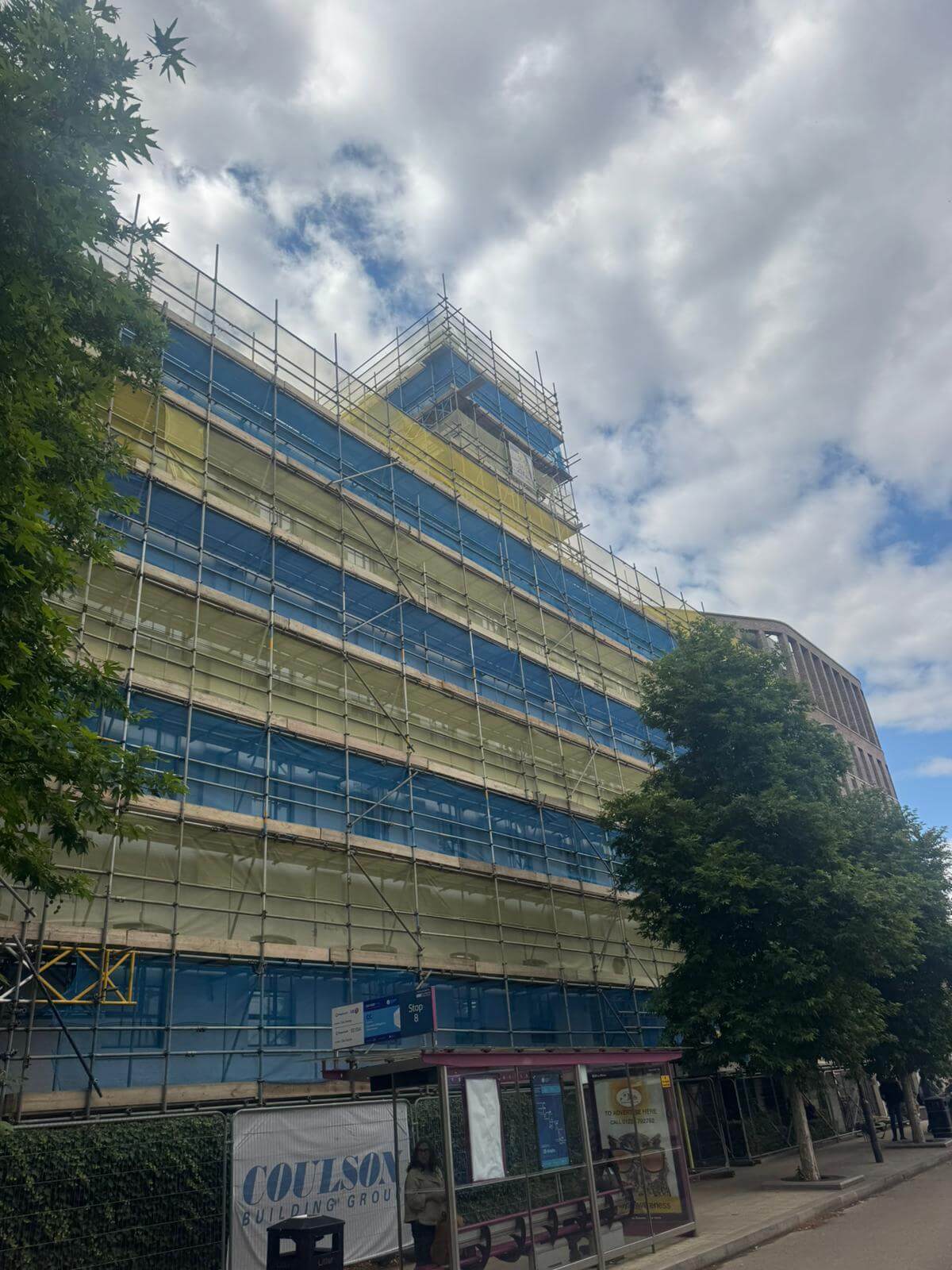
A good Cambridge scaffolder will complete full risk assessments and method statements (RAMS) for each project. This covers the health, risk, and safety on your site. RAMS cover the main risks on site, such as access routes, public areas, overhead services, vehicle movement, and how other trades will work around the scaffold.
If your Cambridge scaffolders miss this step, you risk non-compliance with HSE and Work at Height Regulations. It also makes it harder to prove you’ve done your part if anything goes wrong.
Think of a loft conversion on a narrow Cambridge terrace. You might have school children walking past, or tight parking. There could be limited space for scaffold towers, loading bays, and safe drop zones. A proper site survey and RAMS show you how to manage deliveries, where to build access towers, and how to protect the public with safety netting and edge protection.
At PJ Slater, RAMS come as standard on all commercial, industrial, and domestic scaffolding projects. Our experienced team ensures every scaffold design is fit for purpose. This means it’s safe to use and ready for inspection before any trades step onto it.
2. Regular scaffold inspections
Once the scaffold is up, the health and safety work keeps going.
By law, scaffolds must be inspected before first use, every seven days, and after extreme weather or structural changes. These safety inspections can pick up loose fittings, damaged boards, missing guardrails, and changes to loading. Without them, you risk collapse, failed audits, or work stoppages.
Picture a temporary roof on a domestic roofing job. High winds or heavy rain can shift sheets, loosen ties, or move crash decks. A quick look won’t do. You need documented scaffold inspections and reports.
PJ Slater’s scaffolding safety inspections are scheduled and documented. We log all inspections with clear digital records available for compliance and audits.
You stay compliant, prevent stoppages, and keep crews working safely.
3. Accredited, qualified scaffolders
Safety regulations are central to every reputable Cambridgeshire scaffold hire service. You wouldn’t send unqualified scaffolders to work at height. An experienced, qualified team backs genuine safety-first scaffolding with formal accreditation.
Look for compliance with ISO and HSE regulations. Industry-recognised qualifications prove your team follows strict health and safety regulations.
Without these, you rely on guesswork. You don’t want to risk accidents, invalid insurance, or legal exposure. Choose a compliant scaffolder, and you’re protecting your crew, your project, and your reputation.
PJ Slater’s CISRS-certified team is fully qualified with up-to-date training. Every team member holds a CSCS card and is CHAS-accredited. PJ Slater’s ISO 9001 compliance means processes are consistent across every job.
Our scaffolding safety certifications give you peace of mind that every structure complies with national and local regulations. Plus, our strong safety record built over 40+ years shows our commitment to delivering professional work to British Standards over many decades.
 4. Edge protection and fall prevention systems
Falls from height are still one of the main dangers in construction.
Any Cambridge scaffolder should include proper edge protection and safety netting as fall prevention in any scaffolding installation. That includes guardrails, mid-rails, toe boards, safety netting, and fall arrest systems.
PJ Slater uses robust edge protection and safety netting as standard across commercial, industrial, and domestic scaffolding projects.
5. Temporary roofing and weather protection
Cambridge weather can cause real disruption to construction projects.
Without temporary roofs and weather protection, you’re left exposed to the elements. This can cause delayed schedules, damaged materials, and frustrated clients.
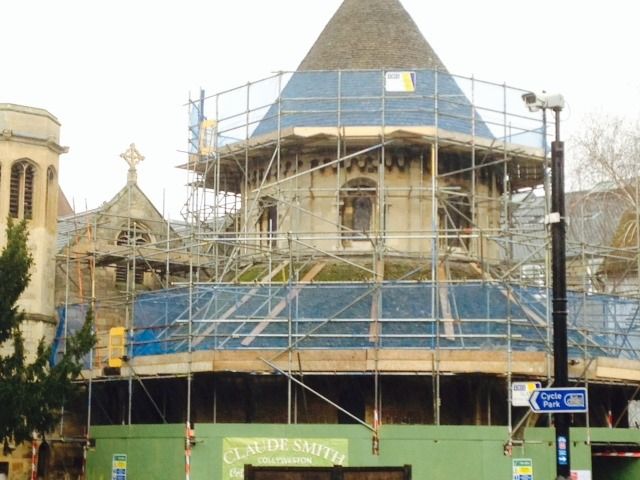
Temporary roofing protects stonework, timber, and internal finishes across heritage sites, new builds, and long-term refurbishments. It safeguards both the building and the people working on it.
PJ Slater offers temporary roofing solutions to go with all commercial scaffolding setups across Cambridge. Sites are kept dry, allowing trades to work in bad weather. Work keeps to schedule, and you protect your materials.
6. Bespoke scaffold design for complex sites
Cambridge is full of tricky access challenges.
Heritage sites, confined spaces, or high-rise projects need more than a standard scaffold.
One-size scaffolding won’t do. It can be unsafe, risking structural failure or damage to sensitive sites.
PJ Slater’s in-house design produces bespoke scaffolding from Cambridge colleges to industrial units. Our tailored scaffold planning ensures your scaffold is safe, workable, and suited to your site. You pretect sensitive areas without compromising safe access.
7. Insurance and liability cover
If accidents happen, you need to know you’re protected.
A professional Cambridge scaffolder should hold strong public liability and employers’ liability insurance. Without this, liability may fall on the main contractor or client.
PJ Slater is fully insured, with cover for all scaffolding projects.
8. Clear communication and documented handovers 
A scaffold is only safe if people know how to use it.
A reliable scaffolder communicates clearly from the first enquiry through scaffold erection, safety inspections, and dismantling. That means agreed timelines, clear access plans, handover briefings, and change updates.
Poor communication can lead to missed inspections or unsafe use of scaffolds. Imagine a busy refurbishment in Cambridge where trades rotate weekly. Without proper handover and communication, someone may miss safety elements and advice.
PJ Slater focuses on making sure everyone has the right safety briefings and we pride ourselves on our open lines of contact. Our testimonials attest to this, showing that contractors value our reliability and responsiveness.
Why PJ Slater Is a Safety-First Cambridge Scaffolder
PJ Slater has built a trusted reputation as one of the leading scaffold companies in Cambridgeshire, Leicestershire, Lincolnshire, Northamptonshire, and beyond for over 40 years.
Known for tidy sites, honest advice, and reliable turnaround, we have a strong focus on safety, compliance, and outstanding customer service.
Here’s what sets our scaffolding hire apart:
- Safety-first approach: Method statements, risk assessments, and regular inspections ensure professional standards. We supply roof protection, edge protection, and safety netting in-house.
- Quality and Safety You Can Trust: We’re fully QMS ISO 9001–compliant and follow NASC best practice, including SG4:15 and TG20:13 guidance.
- Highly-trained and skilled scaffolders: All operatives are CISRS-qualified, CHAS Accredited.
- Proven track record in commercial, industrial, and domestic scaffolding projects: Our full-service scaffolding solutions cover design, erection, inspection, and dismantling.
- Transparent pricing: Bespoke modelling delivers efficient service from start to finish.
- Customer-first service: We have a reputation for tidy work, proactive safety, and happy customers.
That’s why contractors, builders, and site managers across Cambridgeshire trust PJ Slater.
Looking for a safety-first Cambridge scaffolder? Pick PJ Slater.
Safety in scaffolding is non-negotiable. It saves time, money, and lives.
If you’re looking for a Cambridge scaffolder who treats safety as standard, not an optional extra, PJ Slater is ready to help. Contact us to book your next project.
📞 01733 234 831
📧 info@pjsscaffold.co.uk
📝 Enquiry form available opposite
We serve clients Cambridgeshire, including Ely, Huntingdon, St Neots, St Ives, and beyond. We also service Peterborough, Stamford, Lincolnshire, Northamptonshire, Leicestershire, Rutland, and Bedfordshire.
Got more questions? Visit our Scaffolding FAQs.